Wednesday, November 15, 2006

The secret formula

The Bollard reports today on the proposed "formula business" limits proposed for downtown Portland.

This idea, a reaction to a recent proposal to install a Hooters joint on Congress Street, rides the wave of "Keep Portland Independent" sentiment, which finds its expression in bumper stickers and tee shirts in nearly every Old Port storefront. And, on some level, it's a nice idea: support local businesses by keeping big franchises out.

Too bad this proposed legislation is such a mess.

The ordinance, championed by Karen Geraghty, is full of tortured legal language that tries to define what a "formula" business really is. It's difficult, because many of Portland's businesses, which no one wants to expel from the city, already follow some sort of "formula." As a result, the ordinance is long, confusing, and full of loopholes.

Which shouldn't be surprising, given the fact that this is all a knee-jerk reaction to the idea (horrifying to Portland's well-heeled bobos) that a roughneck joint like Hooters might end up on Congress Street. Where was Geraghty when other chains like Starbucks or Cold Stone Creamery moved in?

Downtown Portland has a bigger problem than the prospect of Hooters. This city's retail trade is thriving, but there's very little diversity among its businesses. You can "Keep Portland Independent" if you need to buy a tee shirt or precious bits of pottery, but good luck finding independent retailers of sensible things like nails, wastebaskets, or reasonably priced groceries. Ultimately, keeping chain businesses out of downtown will keep on driving (literally) the middle class out of the city to buy the things they really need at the mall.

Maddeningly, this might be exactly what certain members of the Council are after. Gereaghty's "Keep Portland Real" coalition, formed to support her legislation, consists of such tony retailers as Standard Baking and Aurora Provisions. Certainly a place like Hooters is anethma to the upscale shopping mall that they want Portland to be. But a functional city that serves its residents shouldn't be.

Wednesday, November 08, 2006

TABOR tabled

A little over two years ago, I wrote this op-ed piece about Carol Palesky's first tax-cap proposal.

Voters rejected the second tax-reform referendum in as many years yesterday. And for a second time, we'll wait expectantly for our state legislature to take up the crucial issue of tax reform.

After the failure of the 1% tax cap in 2004, most people expected the Governor and the legislature to jump on the issue of tax relief. There have been a few initiatives, like the effort to regionalize services and to transfer more school funding to the state, but the near-success of TABOR tesifies to how unsatisfactory the results have been thus far.

Today's Press Herald argues that the voters who rejected TABOR were concerned more with this specific initiative than with tax reform in general, and that the next legislature will be expected to make Maine's tax system more equitable.

Only 37% of voters approved Question 1 in 2004. Last night, 46% of voters said "yes" to TABOR. If the legislature doesn't act quickly, we'll have another citizen-led effort to hack the state budget in 2008 - and the third time's the charm.

Sunday, November 05, 2006

The million-dollar plan

Conventional wisdom regarding Maine's economy cites high taxes and closed mills, but conventional wisdom is also a handy tool for political hacks. GrowSmart Maine has commissioned a study from the Brookings Institution that promises us that Maine "stands within reach of a new prosperity-" if we follow their think tank advice.

I've only read a bit of the report so far, but the executive summary cites some striking statistics. For example, between 1980 and 2000, Maine converted more than 1,300 square miles (an area the size of Rhode Island) from rural fields and woodlots to suburban subdivisions. "In the 1990s only Virginia lost a greater share of rural land than Maine." Maine is not an especially small state, and most of it is rural, but nevertheless, we plopped houses on farms and forests faster than Texans could turn their plains to shopping malls and Florida could turn its swamps into retirement communities. This has got to be rough news for Mainers inclined to think of those other places as self-consuming sprawl-slums: Maine is doing even worse.

Here's another one: Maine's population was increasing faster than the populations of 24 states in 2000, and has had the 5th highest rate of domestic in-migration since 2000. The new arrivals are wealthier, older, and increasing Maine's average per-capita income simply by being here. On paper, this looks good: Maine's per-capita income is now almost as high as the national average. But if you have a town of four people who each earn $20,000 a year and a millionaire moves in, the per-capita, or average income of that town will suddenly get very high, even if the original four residents lose their incomes entirely. Similarly, we can have thousands of rich retirees move here and improve our economic statistics, but the lives of those who are here now won't necessarily improve.

Indeed, the report notes that "many high-paying manufacturing and forest jobs have been replaced by lower-paying consumer services positions," such that job growth statistics mask a reality of decline.

So, migration is causing some problems, but not as many as most Mainers would have you believe. New arrivals are giving us jobs in the state's most promising sectors, from organic farming (thanks, Casco Bay bobos) to health care (thanks, all you geriatrics), to financial services (thanks, Martha Stewart and all the rest of those midcoast MBAs). In fact, maybe we could harness the wealth of our new arrivals to offset some of the problems posed by their arrival... say, by lowering taxes, conserving rural land and enhancing downtowns, and providing job training for the rest of us?

Well, the Brookings Institution has some advice about how to do that, too. More on the the solutions in a future post.

Click here to read the Brookings report in its entirety.

Thursday, November 02, 2006

Back in Maine!

After seven years of (mostly) absence, I will be returning very soon to my childhood home state of Maine. Jess and I plan to sign a lease for a Portland apartment as soon as we find one that suits us, and while I still haven't figured out whether or not I'm still registered to vote in Standish, I can at least start to participate as an electronic citizen.

And so, reflecting the change in headquarters, the plan is for future posts to be more frequent and more Maine-focused. But, just as Maine's environmental issues usually relate to global forces beyond its control, I also plan to continue writing on the broad topic of nature and how people conceive of and relate to it.

It's good to be back in the vigorous north.

Monday, August 21, 2006

haliaeetus leucocephalus

Some photos of Inwood's bald eagles (click to enlarge). One bird has already crossed the Hudson and is headed north; the others are expected to follow soon.


A bald eagle perched above the Harlem River in Manhattan. The Broadway Bridge and the Bronx are in the background.


An eagle in flight over the tidal basin.


This is one of the birds "branching" a few weeks ago. Before they're able to really fly, bald eagles typically spend a few weeks hopping around branches and getting a feel for how their wings work.

Friday, August 11, 2006

The tree that grows in Brooklyn (and anywhere else it cares to)

Ailanthus Altissima doesn't get the respect it deserves. Also known as the Tree of Heaven, this tree is the preeminent pioneer species in urban ecosystems. You'll find it growing in the cracks of street pavement, on the edges of parking lots, on the eaves of neglected buildings, and almost anywhere else where there's more than a thimbleful of dirt. Once you know what to look for (see photo at left), you'll see it everywhere in New York.


The Tree of Heaven in its typical habitat. Yep, that's heaven. Not quite what you expected, is it? Creative Commons photo by spike55151 on Flickr.


Ailanthus is almost perfectly adapted to urban living. A mature tree can produce hundreds of thousands of seeds, which scatter in the wind and lodge themselves in precisely the same nooks and crannies where loose bits of dirt collect. The tree's powerful root growth is strong enough to break up concrete and pavement. Thus, Ailanthus trees are important pioneer species in the transformation of vacant lots: their roots break up impervious surfaces and loosen compacted soils so that other, less hardy plants can follow afterward. In Williamsburg, there are dozens of old parking lots that Ailanthus trees have helped to transform into grassy savannas.

In spite of all this, some people think that Ailanthus trees are "weeds." They call Ailanthus "invasive" (it's native to China), they moan about cracks in their precious concrete infrastructure, and they claim that the trees have a "strong, offensive odor" (a quote from the National Parks Service Alien Plant Working Group, which has a desperado-style outlaw poster about Ailanthus here). Like it or not, though, Ailanthus is here to stay. So save yourself some hassle and appreciate this tree.

Thursday, August 10, 2006

Last chance to see these birds...

Though we expect them to return someday, Inwood's bald eagles are due to leave New York City any day now.

In the meantime, they're becoming excellent flyers and are really fun to watch. The Rangers, including yours truly, are putting on daily eagle programs at 2 pm, and sometimes at 11 am as well. The birds are easy to find, so we can almost guarantee that participants will be able to see a bald eagle. In New York City.

Click here for directions to Inwood Hill Park and the nature center.

Sunday, August 06, 2006

What's in the water


We received this message from the Parks' Natural Resources Group late last week:

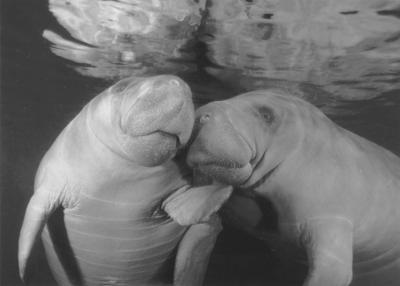
"We had a bona fide manatee sighting in the Hudson River heading North. This particular animal has been making his way north up the coastline with sightings reported first at 23rd Street and then later at 125th (40.81826 N - 73.96201 W). On both occasions it was observed at the surface adjacent to the bulkhead and appeared to be heading further north up the river. As you can imagine, we are very anxious about hearing about our wayward visitor... The animal has been described as approx. 10 feet in length and has barnacles on its dorsal surface. If you could both spread the word to anyone who may be in the vicinity to keep their eyes open. We are looking for photo-documentation of the animal and wish to be advised of any sightings immediately."


Since manatees' range is usually limited to peninsular Florida, and occasionally as far north as Virginia, this particular animal is either: a) a psychopathic vagrant (use caution) or b) a manatee real-estate agent, getting in early on the New York waterfront's global-warming transformation into a sub-tropical mangrove swamp.